
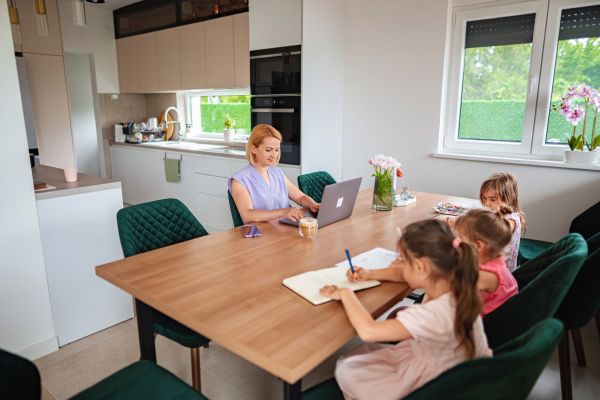
Teaching kids responsibility at home does not have to feel like a formal lesson, a strict training program, or a daily battle over chores. In many families, responsibility grows slowly through the ordinary rhythm of home life. A child learns to put shoes by the door, carry a plate to the sink, feed the pet, pack a school bag, or remember where the clean laundry belongs. These small habits may look simple from the outside, but they quietly shape how children see themselves and their role in the family.
For parents, the challenge is often not knowing where to begin. Some children resist tasks. Some forget. Some are eager to help for one day and then lose interest the next. That is normal. Responsibility is not built overnight. It develops through repetition, patience, and routines that feel clear enough for children to follow.
When teaching kids responsibility at home, the goal is not to make children act like little adults. It is to help them understand that their actions matter. Home becomes the first place where they learn cooperation, effort, accountability, and care for shared spaces. And the best part is that this learning can happen naturally, without pressure or perfection.
Responsibility Begins with Belonging
Children are more likely to take responsibility when they feel like they are part of something. A home is not just a place where adults do everything and children receive everything. It is a shared space, and even young children can learn that everyone has a small part to play.
This does not mean handing over big tasks too early. It means using everyday moments to show children that their contribution counts. When a child places napkins on the table before dinner, they are not just completing a tiny job. They are helping the family meal happen. When they put toys back in a basket, they are making the room nicer for everyone. These small acts create a sense of usefulness.
Children often enjoy feeling capable, even if they do not always show it. A simple phrase like “That really helped our morning go smoothly” can mean more than a long lecture about responsibility. It connects the task to real life. It tells the child, gently, that what they did mattered.
Start with Simple Routines They Can Actually Manage
One common mistake parents make is expecting responsibility to appear before the routine is clear. Children need structure. They need to know what is expected, when it should happen, and how to do it. A vague instruction like “clean your room” can feel overwhelming, especially for younger children. A clearer routine, such as “put books on the shelf and clothes in the basket,” is easier to understand.
Simple home routines work because they reduce confusion. A child who knows that pajamas go under the pillow every morning does not have to rethink the task each day. A child who always puts their lunchbox on the kitchen counter after school starts to build automatic habits. Over time, these little steps become part of daily life.
The best routines are short, repeatable, and connected to something already happening. After breakfast, the child takes the plate to the sink. Before bedtime, toys go back into one place. After school, shoes go by the door. These routines do not need to be dramatic. In fact, the calmer and more ordinary they feel, the more likely they are to stick.
Match Tasks to Age and Ability
Responsibility should grow with the child. A toddler can put blocks in a bin. A preschooler can help sort socks or water a plant with supervision. A school-age child can make a bed, pack a bag, or help set the table. Older children can manage laundry, prepare a simple snack, care for a pet, or keep track of homework supplies.
The exact task matters less than whether it is realistic. If a job is too hard, children may feel defeated before they begin. If it is too easy, they may not feel challenged or trusted. The sweet spot is a task that requires a little effort but still feels possible.
It is also helpful to remember that children develop at different speeds. One child may remember routines easily, while another may need reminders for weeks. That does not mean one is responsible and the other is not. It simply means they need different kinds of support. Responsibility is a skill, and like any skill, it improves with practice.
Teach the Task Before Expecting Independence
Children are often told what to do without being shown how to do it. Adults may forget that simple tasks still have steps. Making a bed, wiping a table, organizing a backpack, or folding clothes can feel obvious to a parent but unclear to a child.
A better approach is to teach first. Show them once. Do it together a few times. Then let them try with gentle guidance. This may take longer in the beginning, but it prevents frustration later. A child who understands the task is far more likely to complete it without constant reminders.
It also helps to accept that the result may not look perfect. A child’s folded towel may be uneven. A made bed may still have wrinkles. The toy shelf may not look exactly the way an adult would arrange it. That is fine. Early responsibility is not about flawless results. It is about effort, participation, and learning.
When parents redo every task immediately, children may feel their help was not good enough. Instead, offer small corrections only when necessary. A calm comment such as “Let’s put the books upright so they don’t fall” teaches without discouraging.
Use Natural Consequences When Possible
Responsibility becomes more meaningful when children see how choices connect to outcomes. Natural consequences can be powerful teachers, as long as they are safe and fair. If a child forgets to put a favorite shirt in the laundry, it may not be clean for the next day. If toys are left scattered, it takes longer to find a missing piece. If a school bag is not packed at night, the morning feels rushed.
These moments should not be turned into punishment or shame. The point is not to say, “I told you so.” The point is to help children notice the connection. A parent might say, “Your library book was hard to find because it wasn’t in your bag. Let’s think of a place it can go next time.”
Natural consequences work best when parents stay calm. Children learn more from steady guidance than from anger. When responsibility is taught through fear, children may obey for a while, but they do not always develop real understanding. When it is taught through connection and consistency, the lesson lasts longer.
Make Responsibility Part of Family Culture
A responsible home does not depend on one child doing everything correctly. It depends on a family culture where helping is normal. Children notice what adults do. If parents take care of things, keep promises, apologize when needed, and follow through, children absorb those patterns.
This does not mean parents must be perfect. Actually, it can be useful for children to see adults handle mistakes honestly. A parent might say, “I forgot to take the trash out last night, so I’m doing it now.” That simple sentence shows accountability without drama.
Family language also matters. Instead of presenting every task as a burden, parents can frame routines as part of living together. “We all help after dinner” feels different from “You have to do this because I said so.” The task may be the same, but the message changes. One approach builds cooperation. The other often creates resistance.
Avoid Turning Every Task into a Reward System
Rewards can sometimes help children start a habit, especially when the task is new or difficult. But responsibility should not depend entirely on prizes, stickers, or money. If every small action earns a reward, children may begin to see helping as something they do only when there is a direct benefit.
A more lasting approach is to connect responsibility with confidence, independence, and contribution. Children can feel proud because they remembered something. They can enjoy being trusted with a job. They can notice that the home feels better when everyone helps.
Praise should focus on effort and impact rather than making children feel they must perform for approval. “You stayed with the task even when it was boring” is more useful than “You’re the best helper ever.” Specific praise helps children understand what they did well and encourages them to repeat it.
Give Choices Without Giving Up Structure
Children often respond better when they have some control. Responsibility does not always have to be assigned in a rigid way. A parent might ask, “Would you rather feed the dog or clear the plates?” or “Do you want to tidy your desk before or after your snack?” The task still needs to happen, but the child gets a voice in how it happens.
Choices can reduce power struggles because children feel respected. At the same time, parents should keep the structure clear. Too many choices can become confusing, and open-ended questions may invite negotiation. Simple choices work best.
This balance matters. Children need guidance, but they also need room to practice decision-making. When they choose a task and complete it, they begin to feel ownership. That sense of ownership is a key part of responsibility.
Be Patient with Resistance and Forgetfulness
Even with good routines, children will forget. They may complain. They may rush through tasks. Some days they will seem responsible, and other days it may feel like everything has gone backward. This is part of the process.
Parents can respond with consistency rather than frustration. A calm reminder such as “Shoes by the door, please” is often more effective than a long speech. If the same issue happens repeatedly, the routine may need to be simplified, moved to a better time, or supported with a visual reminder.
It is also worth asking whether the child is tired, hungry, overwhelmed, or distracted. Sometimes what looks like laziness is simply a child struggling with transitions. Responsibility grows best in an environment where expectations are firm but understanding is still present.
Let Children Experience Real Trust
As children grow, they need chances to prove they can handle more. Trust can begin in small ways. A child might be responsible for checking the mailbox, choosing clothes for the next day, keeping a homework folder in order, or helping a younger sibling with a simple routine.
Real trust is different from constant supervision. Parents can check in, but they do not need to hover over every step. When children sense that adults believe in their ability, they often rise to meet that belief. They may not do it perfectly, but they learn from the experience.
Of course, trust should be gradual. A child who has never managed a task may need support before full independence. But over time, stepping back is just as important as stepping in. Responsibility grows when children are allowed to practice it in real life.
Conclusion
Teaching kids responsibility at home is less about strict rules and more about everyday practice. It happens in the small routines that repeat quietly: putting things away, helping with meals, caring for belongings, noticing what needs to be done, and learning from mistakes. These moments may not feel important at the time, but they build habits that children carry far beyond childhood.
The most effective approach is patient, clear, and realistic. Children need tasks they can manage, guidance before independence, and a home culture where helping is simply part of belonging. Some days will be messy. Some routines will need to be taught again and again. That does not mean the lesson is failing. It means children are learning.
In the end, responsibility is not something parents can force into a child all at once. It is something they help grow, one ordinary home routine at a time.