
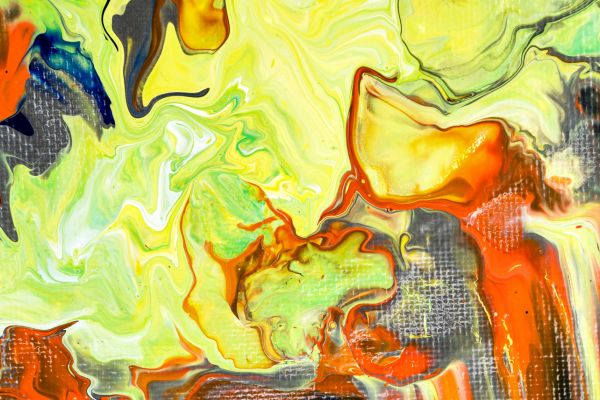
Understanding the Freedom Behind Abstract Art
Abstract art can feel mysterious at first, especially if you are used to drawing what you see in a direct, realistic way. A bowl of fruit has edges. A portrait has features. A landscape has a horizon. Abstract art, though, asks a different question. Instead of “What does this look like?” it asks, “What does this feel like?”
That freedom is exciting, but it can also be intimidating. A blank canvas suddenly seems very large when there is no obvious subject waiting to be painted. This is where abstract art techniques become useful. They give you a place to begin without forcing the work into a strict formula. They help you explore color, movement, texture, rhythm, contrast, and emotion in a more deliberate way.
The beauty of abstract art is that it does not have to explain itself completely. It can suggest, interrupt, whisper, clash, or breathe. Still, strong abstract work rarely happens by accident alone. Behind the looseness, there is often a quiet structure holding everything together.
Starting With Color as the Main Language
Color is one of the most powerful tools in abstract art. Without a recognizable subject, color often becomes the first thing a viewer feels. A deep red can create tension or warmth. Pale blue can feel airy, distant, or calm. Yellow may bring energy, but too much of it can become restless.
One helpful approach is to begin with a limited palette. Instead of using every color available, choose three or four shades and explore how they interact. This keeps the painting from becoming visually noisy too soon. You might start with one dominant color, one supporting color, and one accent shade that appears only in small moments.
Some artists like to build a painting around contrast, placing cool tones against warm ones or soft neutrals beside sharp brights. Others prefer harmony, using colors that sit close together and create a quieter mood. Neither approach is better. What matters is intention. When color has a job, the painting begins to feel more confident.
Layering for Depth and History
Layering is one of those abstract art techniques that can completely change the life of a piece. A single flat layer may feel immediate, but several layers can make a painting look as though it has been lived in. Marks peek through. Earlier choices remain half-visible. The surface begins to carry a sense of time.
You can layer paint thinly with washes, letting each coat dry before adding the next. Or you can work more heavily, scraping, covering, and repainting areas as the image develops. Sometimes the most interesting part of a painting is not the final mark, but the older mark underneath it.
Layering also takes pressure off the beginning. The first marks do not need to be perfect because they may only become part of the background. This allows you to work more freely. A rough patch, a strange color, or an awkward line can later become the very thing that gives the artwork character.
Using Texture to Make the Surface Speak
Texture brings a physical presence to abstract work. It invites the eye to slow down and travel across the surface. Thick paint, dry brush marks, scratches, pasted paper, sand, fabric, or palette knife ridges can all give a piece more dimension.
A palette knife is especially useful for creating bold texture. It can spread paint smoothly, drag color across a surface, or leave raised edges that catch the light. Dry brushing creates a different effect, leaving broken, scratchy marks that feel raw and spontaneous. Sponges, cloth, cardboard, and even old credit cards can also create unexpected surfaces.
Texture does not always need to be dramatic. Sometimes a subtle shift between smooth and rough areas is enough. The contrast between them can make the painting feel more alive, almost like it has different temperatures.
Creating Movement With Gesture
Gesture is the energy of the hand made visible. It might be a sweeping brushstroke, a quick charcoal line, a splash of ink, or a repeated motion that travels across the canvas. In abstract art, gesture can replace traditional subject matter by giving the viewer something to follow.
Large gestures often feel bold and emotional. Smaller repeated gestures can feel meditative or nervous, depending on their rhythm. The speed of the mark matters too. A slow, heavy stroke feels different from a fast, flicked line.
To practice gesture, try standing while you work. Use your whole arm instead of only your wrist. Let the mark come from the shoulder, or even from the movement of your body. This can loosen the painting and help it escape stiffness. Abstract work often benefits from that sense of physical involvement.
Exploring Shape and Composition
Even the most expressive abstract painting needs some kind of composition. Composition is what keeps the eye moving without getting lost. It decides where the visual weight sits, where the quiet spaces are, and how different parts of the artwork relate to each other.
Shapes can be geometric, organic, sharp, soft, crowded, or sparse. A large dark shape near one edge can create drama. Several small shapes scattered across a surface can create rhythm. Curved forms may feel natural and flowing, while hard-edged blocks can feel architectural or controlled.
Negative space is just as important as the painted areas. Empty or quieter spaces give the eye somewhere to rest. Without them, a painting can become too dense. Many beginners feel the urge to fill every inch, but restraint can make the active areas stronger.
Working With Chance and Control
Abstract art often lives somewhere between planning and surprise. Too much control can make it feel stiff. Too much randomness can make it feel unresolved. The interesting part is learning how to move between the two.
Pouring paint, dripping ink, pressing paper onto wet color, or scraping through layers can introduce chance into the process. These methods create effects you cannot fully predict. The task then becomes responding to what appears. You might emphasize an accidental line, soften a harsh edge, or build a new section around an unexpected stain.
This is one reason abstract painting can feel so alive. It becomes a conversation rather than a fixed plan. You make a mark, the painting answers, and then you decide what it needs next.
Using Mixed Media for Richer Expression
Mixed media opens up abstract art techniques beyond paint alone. Collage, pencil, pastel, ink, charcoal, fabric, thread, and found paper can all become part of the work. These materials bring different voices into the same piece.
Collage is especially useful if you enjoy building images in fragments. Torn paper creates edges that feel more natural than cut ones. Old sketches, handwritten notes, magazine textures, or painted scraps can add complexity without making the piece too literal.
Drawing over paint is another effective method. A loose pencil line across a painted surface can create tension. Charcoal can add smoky depth. Oil pastel can introduce rich, stubborn color that sits boldly on top. Mixed media encourages experimentation, and sometimes that slight mismatch between materials is exactly what makes the work interesting.
Finding Emotion Through Repetition
Repetition gives abstract art rhythm. Repeated lines, dots, shapes, or brushstrokes can create movement and unity. A repeated mark may feel calm and ritual-like, or intense and obsessive, depending on how it is used.
The key is variation. If every mark is exactly the same, the piece may become mechanical. But if the marks shift slightly in size, pressure, spacing, or color, they begin to feel human. That imperfection matters. It shows the presence of the artist.
Repetition can also help when you feel stuck. Returning to a simple mark gives your hands something to do while your eye catches up. Often, the painting starts to reveal its direction during this kind of steady, repeated work.
Knowing When to Stop
One of the hardest parts of abstract art is knowing when a piece is finished. Because there is no realistic subject to complete, the ending can feel uncertain. You may keep adding marks just because you can, not because the painting needs them.
A useful habit is to step away often. Look at the work from across the room. Turn it upside down. Take a photo and view it small on a screen. These simple shifts make it easier to see balance, tension, and weak areas.
A painting may be finished when it feels active but not chaotic, resolved but not lifeless. It should still have a little mystery. If every part is explained too neatly, the work may lose some of its pull.
Conclusion
Learning abstract art techniques is not about following rules until every painting looks polished. It is about building a set of tools that help you work with more awareness. Color, texture, layering, gesture, shape, chance, and repetition all offer different ways into the same open field.
Abstract art gives artists permission to explore what cannot always be drawn directly. A mood, a memory, a rhythm, a contradiction, a quiet pressure inside the mind. The more you practice, the more you begin to trust your eye and your instincts. And that is where abstract work becomes deeply rewarding: not because it removes structure, but because it teaches you how to create your own.