
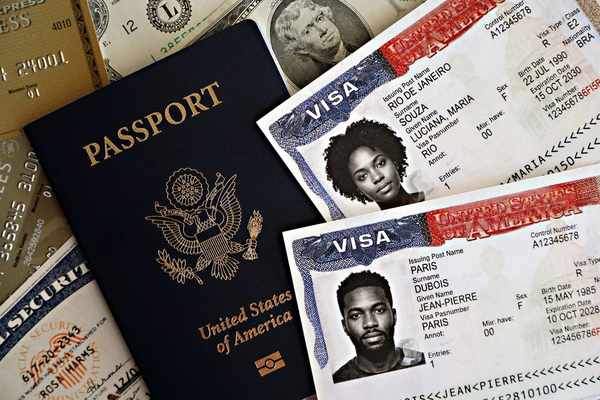
Acclaimed performers, elite athletes and innovative researchers do not always fit the standard U.S. work-visa model. Their careers may involve short projects, several organizations or achievements that matter more than a conventional job title. The O-1 visa offers a route for people who can document exceptional professional standing and have specific work planned in the United States.
An impressive résumé alone is not enough. The central questions are which O-1 category applies, whether the evidence proves the required recognition, and who will petition for the proposed work.
Who qualifies for an O-1 visa?
The O-1 is a temporary employment classification for people with extraordinary ability or achievement who will continue working in their field in the United States. Its categories have different standards, so choosing the correct one matters.
O-1A: Scientists, researchers, athletes and business leaders
The O-1A visa covers science, education, business and athletics. Applicants must demonstrate sustained national or international acclaim and that they belong to the small percentage at the very top of their field. A researcher with influential discoveries or an athlete recognized at an elite competitive level may be a candidate, but professional competence alone is not enough.
O-1B: Artists and screen-industry professionals
O-1B uses a distinct standard for the arts: sustained recognition and distinction, meaning achievement substantially above what is ordinarily encountered. It can apply to performers, designers and other creative professionals. Motion picture and television work falls under a separate O-1B extraordinary-achievement standard, with different evidence and consultation rules. This distinction matters when an artist moves into screen productions.
What extraordinary ability evidence does USCIS require?
For O-1A, a major internationally recognized award can meet the initial evidentiary requirement. Otherwise, the petition generally must establish at least three of eight regulatory criteria. These encompass recognized prizes, selective professional memberships, published coverage about the applicant, judging others’ work, original contributions of major significance, scholarly publications, critical roles for distinguished organizations, and high remuneration compared with others in the field.
Checking three boxes does not guarantee approval. U.S. Citizenship and Immigration Services (USCIS) considers the complete record to decide whether it truly demonstrates extraordinary ability. Membership in a society anyone can join by paying dues, for example, is not equivalent to membership awarded for outstanding achievements assessed by recognized experts.
For O-1B arts cases, the rules provide a separate significant-award route or generally three qualifying categories of evidence. Examples include prominent roles in distinguished productions, critical reviews, notable commercial success, expert recognition and significant compensation. Film and television petitions have related but distinct rules. The proof should match the work proposed, rather than whichever accomplishments are easiest to collect.
Show why the recognition matters
A strong case explains each document. For a prize, establish the selection process and its standing in the field. For press coverage, identify the publication and show that the story discusses the applicant’s work. Recommendation letters should describe specific contributions, not merely praise someone as talented.
Consider a biomedical researcher whose discovery has been adopted by independent laboratories. The record might combine peer-reviewed publications, independent citations, evidence of major scientific impact and invitations to evaluate other researchers’ work. Merely submitting a long publication list would tell USCIS much less about the researcher’s standing.
USCIS permits comparable evidence in certain O-1A and O-1B arts cases when listed criteria do not readily apply. That approach has limits and is unavailable for film-and-television O-1B cases.
Who files the petition: Employer or agent?
A person with extraordinary achievements cannot directly self-petition for O-1 classification. Form I-129 must be filed by a U.S. employer, a U.S. agent or a foreign employer through a U.S. agent. The proposed work must be documented, and authorization remains tied to the approved petition.
An agent petitioner can suit careers involving multiple engagements. Imagine an internationally recognized violinist booked by three orchestras for separate U.S. concerts. Depending on the agency arrangements, a qualifying U.S. agent may file a petition covering the engagements with the required contracts and itinerary.
That does not authorize unrestricted freelancing. The filing must accurately identify relevant activities, dates and contractual relationships. A scientist taking a position at one U.S. laboratory may have a simpler employer-filed case, even with an equally distinguished record.
How does the O-1 application process work?
The petitioner files Form I-129 with evidence of the applicant’s achievements and the proposed U.S. activity. Supporting documents normally include a contract or summary of an oral agreement, an explanation of the work and dates, and a written advisory opinion known as a consultation. The appropriate consulting body depends on the category; motion picture and television cases have specific labor-union and management-organization requirements.
USCIS reviews the petition and may request further evidence. Petition approval does not itself provide a visa stamp. Applicants abroad generally complete any required consular visa process, while eligible people already in the country may request a change or extension of status.
Initial approval can cover the time needed for the specified activity, up to three years. Extensions to continue or complete that activity are generally available in increments of up to one year. A different qualifying activity may support a new petition with a different requested period. Employer or project changes can require additional filings, so authorization should be checked before new work begins.
O-1 visa versus H-1B: The practical difference
H-1B classification centers on qualifying specialty-occupation employment and has separate employer, wage and labor-condition requirements. Most cap-subject H-1B applications also face an annual numerical limit and registration process. O-1 has no annual numerical cap, but it demands an extraordinary record rather than simply an advanced degree or a strong job offer.
A university researcher with a conventional appointment might evaluate both paths. A recognized performer with a series of engagements might find O-1B and a properly structured agent petition more appropriate. Related topics worth exploring include H-1B visa requirements, employment-based green card options and EB-1 extraordinary ability.
Frequently asked questions
Do applicants need a Nobel Prize or Olympic medal?
No. Major internationally recognized awards can help qualify an O-1A applicant, but many candidates rely on meeting at least three relevant regulatory criteria and demonstrating sustained acclaim through their overall record.
Can O-1 visa holders apply for green cards?
Yes. Pursuing permanent residence is not automatically incompatible with O-1 status, but an O-1 approval does not grant a green card. A separate immigrant petition and any applicable adjustment or immigrant-visa process are necessary.
Can spouses work in the United States?
Qualifying spouses and unmarried children under 21 may seek O-3 status. They may study, but cannot work solely because they hold O-3 status.
How long can someone remain on O-1 status?
An initial petition can be approved for up to three years, based on the activity. Continued work requires appropriate extensions or new petitions; renewal is not automatic.
Match the evidence to the proposed work
The most persuasive O-1 petitions connect well-supported professional recognition with a defined U.S. assignment. Identify the correct subcategory, map documents to its particular criteria, and establish who can properly file. Check current USCIS guidance and seek qualified immigration advice when the facts are complex, especially for overlapping artistic categories or multiple employers.